Lose the weight
without cutting
carbs.
Everything you need to start eating for insulin resistance this week, built so you can begin after reading three pages.
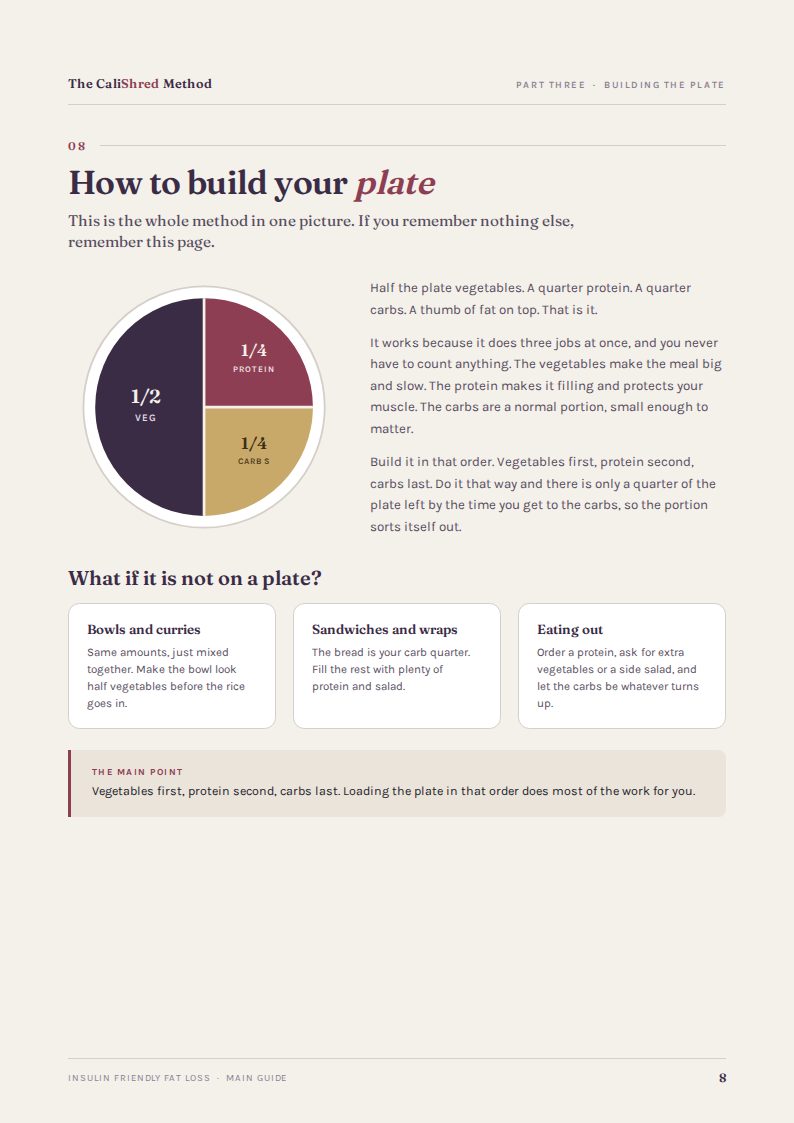
The whole method, on one plate
You were never the problem.
The plan was.
You have done the low carb version, the fasting version and the cut everything version. Some of them worked, briefly. What did not happen was staying there.
What usually happens
- Carbohydrates get cut out, so the first week looks brilliant
- Hunger arrives sooner than it should, and the afternoon gets difficult
- The evening becomes a negotiation you lose more often than you win
- One bad night turns into a bad fortnight, and it starts again on Monday
What this kit does instead
- Keeps carbohydrates in, and changes which ones and how much
- Builds every meal around protein, so hunger stops arriving early
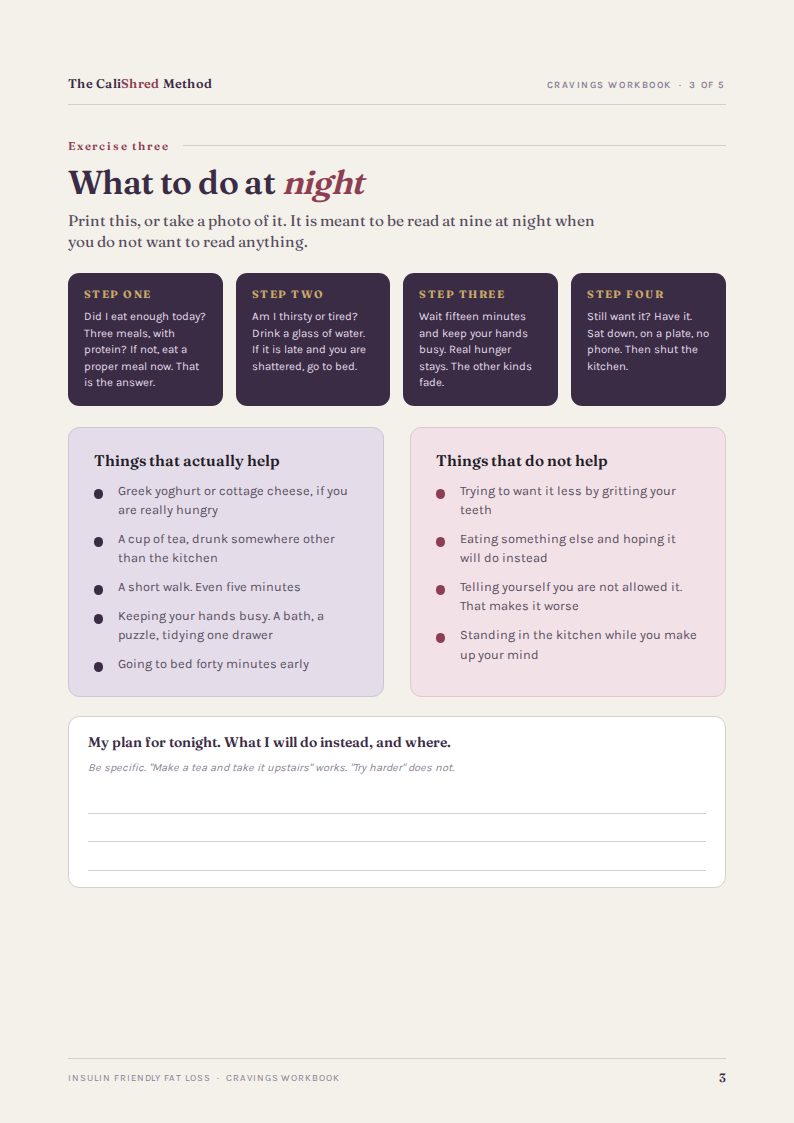
- Gives you a plan for the evening, which is where most weeks fall apart
- Teaches you to recover in hours rather than weeks after a bad day
“I can finally put together a meal without overthinking whether I’m eating the ‘wrong’ foods for insulin resistance.”
Three things change how a
meal actually behaves.
Insulin is a little key that moves energy out of your blood and into your cells. With insulin resistance it does not turn as easily. That does not mean carbohydrates have to go. It means the plate has to change.
Protein first, every meal
The most filling thing per calorie, and what protects your muscle while you lose fat. Your muscles are storage boxes for glucose, so keeping them matters more than the scale does.
Half the plate as vegetables
Volume and fibre slow the meal down, which flattens the rise afterwards and keeps you full for longer on noticeably fewer calories.
Carbohydrates stay, sized to your day
About a quarter of the plate, from slower sources, adjusted up on active days. Removing them entirely is the single most common reason women rebound.
Six resources. Forty five pages.
Twenty you actually read.
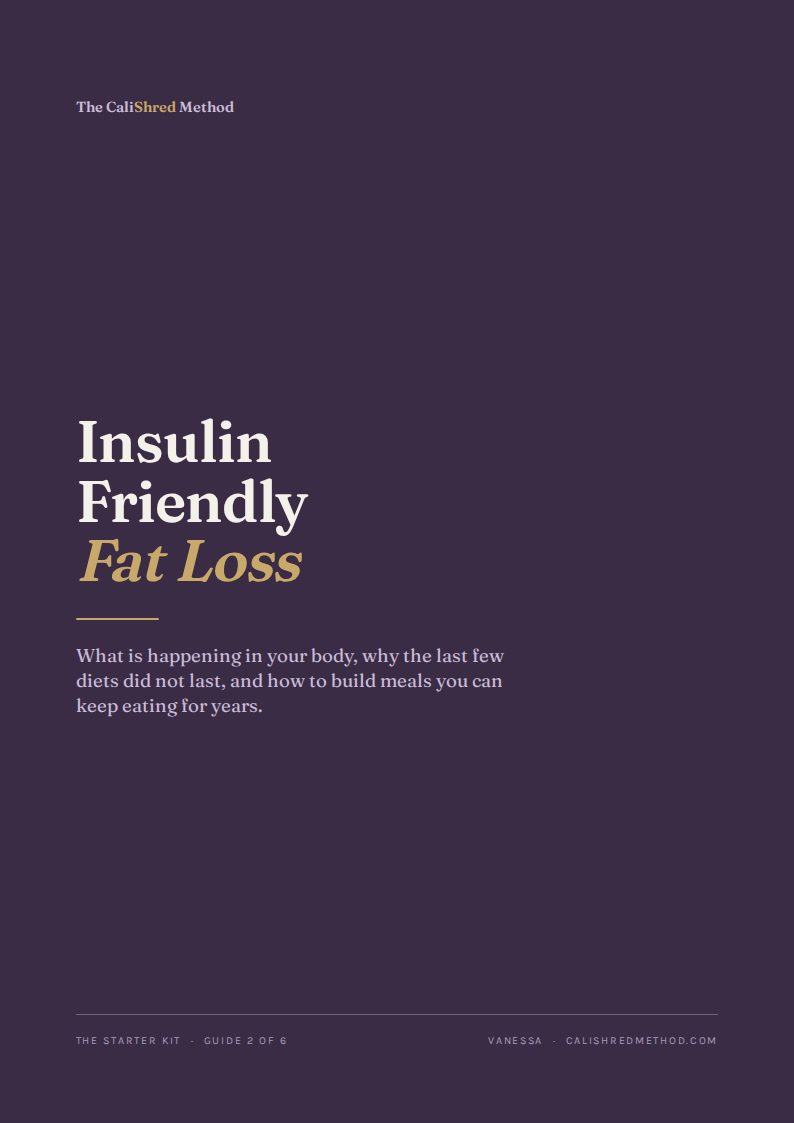
A guided system, not a folder of unrelated PDFs. Start after the first three pages and open the rest only when you need them.
Read This First
Exactly what to do for the next seven days, your five priorities, and a printable first week checklist. The only part you have to read before you start.
The Main Guide
What insulin resistance actually changes about fat loss, why carbohydrates are not the enemy, and how to build every meal. Including what to do after you overeat, which is the page that decides whether this still works in month three.
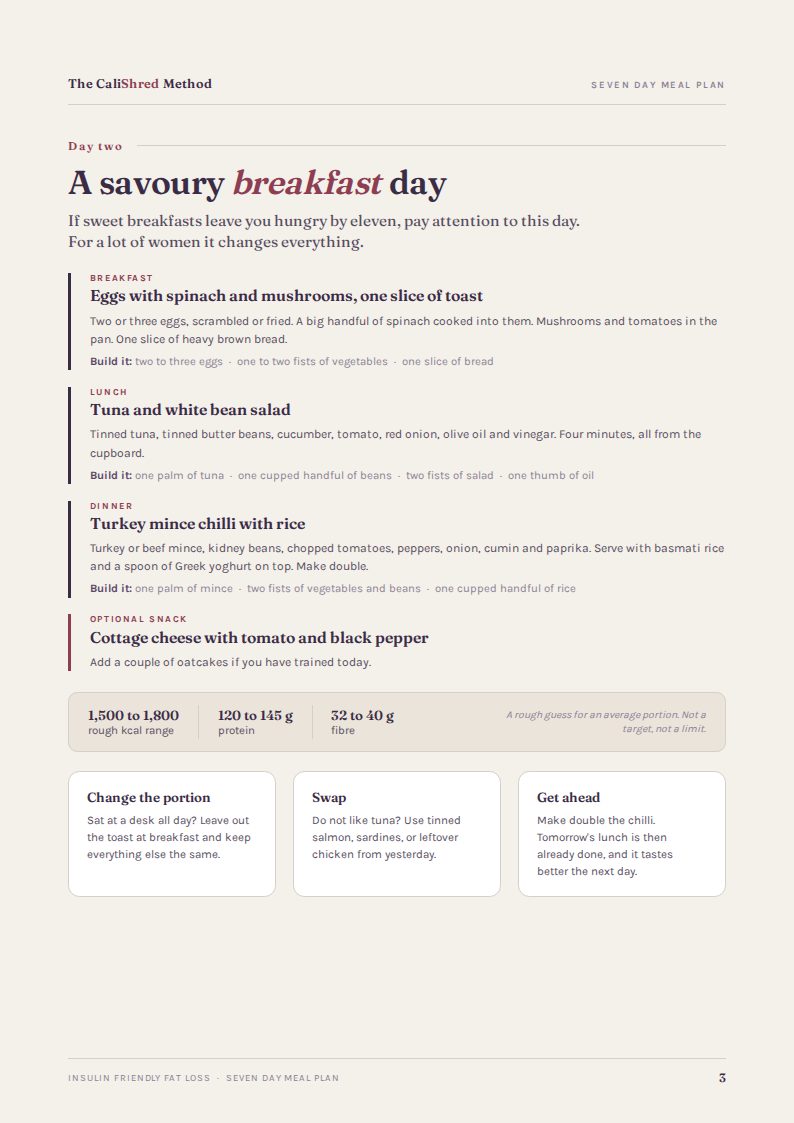
The Seven Day Meal Plan
A page per day. Breakfast, lunch, dinner, an optional snack, a portion adjustment, a swap and a preparation note. Including a Saturday built around eating out rather than avoiding it.
The Meal Builder
Pick one from each column and build your own meals. Breakfast, lunch, dinner and snack formulas, plus a hand portion chart and a substitution table for anything you cannot eat.
The Cravings Workbook
Find your pattern, tell hunger from feeling from habit, and work through the evening with a process designed to be read at nine at night when you do not want to read anything.
Three quick reference sheets
The Balanced Plate, Carbs Without Fear and a supermarket Shopping List. One page each, made to be printed and stuck on the fridge.
Made to be used, not admired.
Real pages from the kit. Every one is designed to be printed, written on and left somewhere you will see it.
Who this is for
This is for you if
- You have been told you have insulin resistance or prediabetes, or you suspect you do
- You are busy, over thirty, and cannot run your life around a diet
- You have lost weight before and put it back, more than once
- You want something you can still be doing in a year
This is not for you if
- You want a fast fix or a fourteen day transformation
- You are looking for a low carb or keto protocol, because this is deliberately not one
- You need medical treatment, a diagnosis, or a plan built around your medication
- You are pregnant or breastfeeding, or living with an eating disorder, where you should be working with a doctor or dietitian instead
Women who did it.
Their own words about what changed once they started using the kit.
The biggest thing for me was finally understanding how to put a meal together. Before this I was constantly Googling what I was ‘allowed’ to eat and second guessing everything. Now I just use the plate guide and get on with my day. Food takes up so much less space in my head.
I genuinely thought carbs were the reason I couldn’t lose weight, so I kept cutting them out and then ending up raiding the cupboards at night. I’ve started having rice or potatoes with my meals again and I’m actually much more satisfied. My evening snacking has gone down loads.
The shopping list sounds like such a small thing but it’s made my week so much easier. I used to walk around the supermarket buying random ‘healthy’ foods and then have no idea what to make with them. I actually have proper meals ready now instead of grabbing whatever is quickest.
My 3pm crash was awful. I’d have coffee and something sweet just to get through the rest of the workday. Since changing my breakfast and lunch using the guide, I’m not thinking about food all afternoon anymore. That alone has made such a difference.
This is the first insulin resistance guide I’ve read that didn’t make me feel like I needed to completely change my life. I’ve got two kids and work full time. I needed something I could actually follow. I’ve been using the meal formula for the last few weeks and for once I feel like I can keep doing this.
I used to wake up trying to be ‘good’ all day, then by dinner I was starving and craving everything. The guide made me realise my meals just weren’t filling enough. I changed a few really simple things and I’m not having that same battle with myself every evening anymore.
Start after three pages.
- All six resources, 45 pages, delivered as eight print ready PDFs
- Download instantly, keep them forever, print as often as you like
- No app, no subscription, no calorie tracking required
- Written by a coach who works with women in exactly this position every day
Things worth asking
Do I have to give up carbohydrates?
No, and the kit argues fairly hard against it. Cutting carbohydrates out entirely is one of the most common reasons women lose weight and then put it back. You will be asked to change which ones you eat most days, how much, and what goes on the plate next to them.
I take medication for my blood sugar. Can I use this?
Speak to your doctor or diabetes team first. Eating fewer carbohydrates or fewer calories while taking insulin, a sulfonylurea or other glucose lowering medication can take your blood sugar too low, and your dose may need adjusting. That is a decision for your prescriber.
The kit says the same thing on its third page, and it is not a formality.
Is this medical advice or a treatment?
No. This is nutrition education from a fitness coach. It does not diagnose, treat or reverse insulin resistance, prediabetes or diabetes, and it does not replace the care of your doctor.
Do I have to count calories or track my food?
No. The whole kit is built on hand portions, which scale to your body, work in a restaurant and take no time. There are rough calorie ranges on the meal plan days so you can see the shape of a balanced day, and page one tells you that you can ignore them entirely.
I have no time to cook. Will this work?
Most of the meals take under twenty minutes and several take none at all. One of the seven days is built entirely from leftovers, and the shopping list leans on frozen and tinned food deliberately.
How long will it take to read?
Three pages before you start. The main guide is twenty pages and is meant to be read a few at a time across your first week. Everything else is a reference tool you open when you need it.
What do I actually receive, and when?
Eight PDF files, delivered by email immediately after payment. They are yours to keep, print and reprint. There is no app, no login and no subscription.
Is there coaching included?
No. This is the method written down, not a coaching programme. If you want to work with me directly, the application form is the place to start.
The next Monday is not
going to be different.
Not on its own. What changes things is having a plate you can build when you are tired, and a page to open on the night it goes wrong. That is what this is.
Get the kit £35Important health information
The Insulin Friendly Fat Loss Starter Kit is general nutrition and lifestyle education. It is not medical advice, and it does not diagnose, treat, cure or prevent insulin resistance, prediabetes, type 2 diabetes or any other condition. It is not a substitute for care from a doctor, a diabetes team or a registered dietitian.
If you take insulin, a sulfonylurea or any other glucose lowering medication, speak to your prescriber before changing how you eat. Eating fewer carbohydrates or fewer calories while taking these medications can lower your blood sugar too far, and your dose may need adjusting.
Please work with a healthcare professional rather than following this kit alone if you are pregnant or breastfeeding, have kidney or liver disease, or have an eating disorder or a history of one. Individual results vary, and nothing on this page is a promise of any particular outcome.